• Skip to main content
  • Skip to secondary menu
  • Skip to primary sidebar
  • Skip to footer
  • Home
  • Who we are
    • What we think
      • Positions
      • Members’ and friends’ contributions
    • What we do
      • Past-Campaigns
      • Upcoming Events
      • Annual Event
      • Past Events
        • General Assembly
      • Environmental Observatory
      • “PAROS 2020” & Tourism Survey
        • Paros Tourism Survey 2012
        • Paros Tourism Survey 2013
  • The Bulletins
    • Issue 31 – summer 2026
    • Issue 30 – spring 2026
    • 2025
      • Issue 29 – summer 2025
      • Issue 28 – spring 2025
    • E-Bulletin Autumn 2024
    • 2023
      • E-Bulletin issue 26 – 2023
      • E-Bulletin Issue 25 – 2023
    • 2022
      • E-Bulletin Issue 24 – Spring 2022
      • E-Bulletin Ιανουάριος/January/Janvier 2022
    • 2021
      • E-Bulletin Issue 23 – Autumn 2021
      • E-Bulletin Issue 22 – Summer 2021
    • 2020
      • Issue 21 – Year 2020
    • 2019
      • E-Bulletin Winter 2020
      • Issue 20 – Summer 2019
      • Issue 19 – Spring 2019
    • 2018
      • Issue 18 – Winter 2018
      • Issue 17 – Summer 2018
      • Issue 16 – Spring 2018
        • articles en francais
        • articles in english
    • 2017
      • Issue 15 – Winter 2017-18
        • articles en Français
        • articles in English
      • Issue 14 – Summer 2017
        • articles en Français
        • articles in English
      • Issue 13 – Spring 2017
        • articles en Français
        • articles in English
    • 2016
      • Issue 12 – Winter 2016-17
        • articles en Français
        • articles in English
      • Issue 11 – Summer 2016
        • articles en Français
        • articles in English
      • Issue 10 – Winter-Spring 2016
        • articles en Français
        • articles in English
    • 2015
      • Issue 09 – Summer 2015
        • articles en Français
        • articles in English
    • 2014
      • Issue 08 – Summer 2014
        • articles en Français
        • articles in English
    • 2013
      • Issue 07 – Summer 2013
        • articles in English
        • articles en Francais
    • 2012
      • Issue 06 – Summer 2012
      • Issue 05 – Spring 2012
    • 2011
      • Issue 04 – Summer 2011
    • 2010
      • Issue 03 – Autumn 2010
      • Issue 02 – Summer 2010
      • Issue 01 – Winter 2009-10
  • Workshops
    • Στρατηγικές για την Αειφορία 2023
    • Health on Paros / Υγεία στην Πάρο / Santé à Paros
      • Workshop on Health – 14.12.2019
      • Atelier sur la Santé – 14.12.2019
      • Ημερίδα για την Υγεία – 14.12.2019
    • Ancient Quarries Workshop
      • Conclusions
      • Conclusions (français)
      • Ομιλίες / Interventions
  • Current & older Issues
    • overconstruction
    • overtourism
    • Marathi Quarries
    • sustainable development
    • Sustainable Tourism
      • Στρατηγικές για την Αειφορία 2023
      • “PAROS 2020” & Tourism Survey 2012-2014
        • Paros Tourism Survey 2012
        • Paros Tourism Survey 2013
    • Airport
    • Wind Parks
  • Events

Friends of Paros & Antiparos Φίλοι της Πάρου & Αντιπάρου Amis de Paros & Antiparos

Sustainable development for Paros & Antiparos Islands

friends of paros & antiparos
  • Ελληνικα >>
  • Ποιοι Ειμαστε
    • Τι πιστευουμε
      • Θέσεις
      • Συμβολή μελών και φίλων
    • Τι κάνουμε
      • Ετήσιες Τελετές
    • Καμπάνιες
  • Τα “Bulletins”
    • Ε-Bulletin 2024 – άρθρα στα ελληνικά
    • 2023
      • E-Bulletin 25 -2023 – άρθρα στα ελληνικά
    • 2022
      • Τεύχος 24 – 2022 – άρθρα στα ελληνικά
      • E-Bulletin Ιανουάριος 2022
    • 2021
      • Τεύχος 23 – 2021 – άρθρα στα ελληνικά
      • Τεύχος 22 – 2021 – άρθρα στα ελληνικά
    • 2020
      • Τεύχος 21 – Έτος 2020 – άρθρα στα ελληνικά
    • 2019
      • Χειμώνας 2019-20 – άρθρα στα ελληνικά
      • Τεύχος 20 – Καλοκαίρι 2019 – άρθρα στα ελληνικά
      • Τεύχος 19 – Άνοιξη 2019 – άρθρα στα ελληνικά
    • 2018
      • Τεύχος 18 – Χειμωνάς 2018 – άρθρα στα ελληνικά
      • Τεύχος 17 – Καλοκαίρι 2018 – άρθρα στα ελληνικά
      • Τεύχος 16 – Άνοιξη 2018 – άρθρα στα ελληνικά
    • 2017
      • Τεύχος 15 – Χειμώνας 2017-2018 – άρθρα στα ελληνικά
      • Τεύχος 14 – Καλοκαίρι 2017- άρθρα στα ελληνικά
      • Τεύχος 13 – Άνοιξη 2017- άρθρα στα ελληνικά
    • 2016
      • Τεύχος 12 – Χειμωνας 2016-17- αρθρα στα ελληνικα
      • Τεύχος 11 – Καλοκαίρι 2016- άρθρα στα ελληνικά
      • Τεύχος 10 – Χειμώνας-Άνοιξη 2016- άρθρα στα ελληνικά
    • 2015
      • Τεύχος 9 – Καλοκαίρι 2015- άρθρα στα ελληνικά
    • 2014
      • Τεύχος 8 – Καλοκαίρι 2014- άρθρα στα ελληνικά
    • 2013
      • Τεύχος 7 – Καλοκαίρι 2013- άρθρα στα ελληνικά
    • 2012
      • Τεύχος 6 – Καλοκαίρι 2012- άρθρα στα ελληνικά
      • Τεύχος 5 – Άνοιξη 2012- άρθρα στα ελληνικά
    • 2011
      • Τεύχος 4 – Καλοκαίρι 2011- άρθρα στα ελληνικά
    • 2010
      • Τεύχος 3 – Φθινόπωρο 2010- άρθρα στα ελληνικά
      • Τεύχος 2 – Καλοκαίρι 2010- άρθρα στα ελληνικά
      • Τεύχος 1 – Χειμώνας 2009-10 – άρθρα στα ελληνικά
  • Contact FoP
    • Membership application . Αίτηση Εγγραφής . Demande d’Adhésion
    • Register to contribute / Inscrivez-vous pour contribuer / Εγγραφείτε για να συμβάλετε
    • Login
  • Ημεριδες
    • Στρατηγικές για την Αειφορία 2023
    • Ημερίδα για την Υγεία – 14.12.2019
    • Ημερίδα για τα Αρχαία Λατομεία
      • Ομιλίες / Interventions
      • Τα συμπεράσματα της ημερίδας – Δελτίο Τύπου
  • Τρεχοντα ζητηματα
  • Εκδηλώσεις
What we do » Current Issues » overtourism/overconstruction » Spatial planning – What kind of development do we want for our islands?

Spatial planning – What kind of development do we want for our islands?

1 October 2026, by FoPA No Comments

Yannis Spilanis

Ελλινικά | Français

Article by Yannis Spilanis

Spatial planning is the spatial expression of economic and social development programmes and constitutes an important tool for achieving social and economic objectives, guided by the principles of sustainability and precaution, with the aim of protecting the environment in the long term and ensuring the best possible living conditions for the population, as stated in the introduction (p. 5) to the Special Spatial Planning Framework for Tourism, which was published recently. A review of the relevant Joint Ministerial Decisions – which are complex technical documents – the Strategic Environmental Impact Assessments (EIS) and the ‘responses’ provided by the Ministry of the Environment itself to the public regarding questions it had posed to itself, provides an insight into how those in charge are thinking.

What is the development model for the islands?

As mentioned previously, spatial planning translates economic and social development programmes into the physical environment. But what does this actually mean for the islands? Have we clearly defined the vision for the islands and set the strategic development objectives? Have we taken into account the right to remain on the islands – which forms part of the European strategy for economic, social and territorial cohesion?

And on this basis, further fundamental questions arise:

First question: What are the development plans and who decided on them? The only clear answer given, and it concerns energy policy and the role of renewable energy sources, is the Prime Minister’s well-known statement… ‘My vision is for Greece to become Europe’s battery.’ Indeed, the Spatial Plan for Renewable Energy Sources reflects this, despite the verbal acrobatics and rhetorical expressions about protecting environmentally sensitive areas.

However, how does this contribute to the economic and social development of the country and its individual regions, when it relies on imported materials, creates very few jobs – and those that are created are unskilled, at least locally, where the renewable energy installations are situated – and has a significant environmental and aesthetic impact (such as, for example, large-scale road construction)?

And finally, the areas being protected are those sensitive to tourism (high-development zones A and B), but not, for example, the mastic-growing areas on Chios. Indeed, have we compared the income and employment generated by mastic on the island with what renewable energy sources will provide? Why are we not making use of the expertise gained on Agios Stratis, where a single wind turbine and two small photovoltaic systems met the island’s needs, whilst at the same time, through the establishment of an energy community (as on Halki), the benefits would remain on the island?

Second question: Do the spatial planning provisions for renewable energy sources (as well as for tourism and industry) conflict with the very philosophy of the government’s own GRECO Islands programme, which supports the economic diversification of the islands by boosting local production, with jobs that will keep educated young people on the islands? Where exactly in the Joint Ministerial Decision on Industry is there provision for creating infrastructure to facilitate collaboration between local businesses, local authorities, and island universities, which will not only harness locally generated knowledge but also create centres of innovation and excellence to tackle the specific challenges facing the islands? Do we want our islands to have activities beyond tourism so we can maintain a population and social life year-round, or not?

Third question: Does the concept of carrying capacity actually exist or not? Recently, the Prime Minister has cast doubt on it, yet it is mentioned repeatedly in the texts of all three Joint Ministerial Decisions, as is the concept of ‘sustainable development’, yet there is no mention of how this will be measured, even though, for sustainable development at least, there are indicators approved by the UN. Are these concepts being used to circumvent the obstacle posed by the Council of State, or will they finally serve to ‘steer’ development towards more sustainable paths, as the texts suggest? An analysis of the National Tourism Development Plan reveals no such intention, as it sets no limits. Even in saturated areas such as Mykonos and Santorini, which have exceeded every limit on building and tourist concentration under the Ministry of the Environment’s own specifications, tourism and residential expansion are set to continue. On Paros, which is following closely in the footsteps of the other islands, the first private development comprising 250 rooms and a corresponding number of swimming pools was recently approved, alongside many other developments, despite the problems of overcrowding, excessive water consumption, and waste management that exist on the island and remain unaddressed. Milos, Ios, Naxos, Tinos, Kos, Corfu, Zakynthos, Rhodes, Kea, etc., while under increased pressure, are considered by the National Tourism Organisation capable of continuing to accommodate new beds.

From sustainable development to the ‘economy of greed’

Citizens have highlighted numerous problems as part of the major consultation carried out and still being conducted by ‘VOICES for the ARCHIPELAGO’ in collaboration with the Laboratory for Local and Island Development, and these relate to both the quality of work and the quality of life on the islands, which are linked to tourism development. Overcrowding, the degradation of the landscape and architecture, the decline in cultural life, excessive dependence on tourism, a significant outflow of income off the island, water and energy problems, etc.—issues that neither the current plan nor the ‘disappeared’ Local Town Planning Schemes will address, as they are not part of their underlying philosophy.

The plan’s philosophy supports an economy of greed that need not be sustainable because, particularly on the islands, it relies on short-term profits from property and state funding through strategic investments. After all, spatial plans are binding only insofar as they give the green light to investment. There is, of course, an alternative model. One centred on people and their right to live in their own communities with dignity and environmental, amongst other things, security.

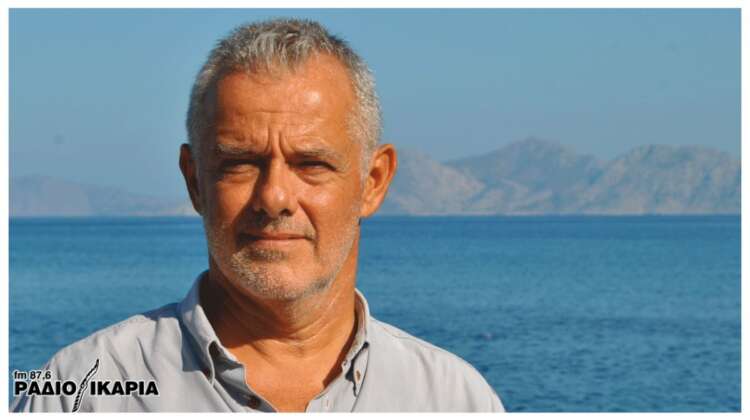
Yannis Spilanis is a professor in the Department of Environmental Studies at the University of the Aegean, Director of the Laboratory of Local and Island Development, and Scientific Director of ‘VOICES for the ARCHIPELAGO’.

Filed Under: English, Featured Articles, Members' and friends' contributions, overtourism/overconstruction Tagged With: civil society, sustainable development, unique cycladic character by FoPA No Comments

Please don't forget to renew your membership
While 100% of donations are devoted to the cause for which they were donated, membership fees must cover the running costs of the association. We urge you not to delay yours!
~~~~~
N'oubliez pas de renouveler votre adhésion
Alors que 100% des donations sont consacrées à la cause pour laquelle elles ont été données, les cotisations des membres doivent assurer les frais de fonctionnement de l’association. Nous vous exhortons à ne pas retarder la vôtre !
~~~~~
Μην ξεχάσετε να ανανεώσετε τη συνδρομή σας
Ενώ το 100% των δωρεών αφιερώνεται στον σκοπό για τον οποίο δόθηκαν, οι συνδρομές των μελών πρέπει να καλύψουν τα τρέχοντα έξοδα του συλλόγου. Σας παροτρύνουμε να μην καθυστερείτε τη δική σας!

Reader Interactions

Leave a Reply Cancel reply

Your email address will not be published. Required fields are marked *

Primary Sidebar

  • E-mail
  • Facebook

Membership / Συνδρομή / Adhésion

Renew Your Membership or Join Us | Ανανεώστε τη συνδρομή σας ή γίνετε μέλος | Renouvelez votre adhésion ou rejoignez-nous

Give an Ancient Story a Second Life / Redonner Vie à des Voix Anciennes / Επαναφέρουμε Αρχαίες Φωνές

Findout more-En savoir plus-Μάθετε περισσότερα

Upcoming Events

Notice
There are no upcoming events.

Recent Comments

  • Morex Catherine on Le projet de Kolymbithres revient — Les citoyens et les Amis de Paros et Antiparos s’y opposent à nouveau
  • Herbert Fittinghoff on Despotiko: Archaeological and Restoration Works 2025
  • Alexandra Williams on Our General Assembly on 28-08-2026
  • Thierry Flahaut on Les piscines à Paros : un luxe que l’île ne peut plus se permettre
  • Giorgio on The Friends of Paros and Antiparos: 25 years of commitment
  • Susanne on Swimming Pools in Paros: A Luxury the Island Can No Longer Afford
  • Klio Kassimidis Curchod on Les piscines à Paros : un luxe que l’île ne peut plus se permettre
  • VALERIE P on Not one more bed on Paros
  • Lippmann on Pas un lit de plus à Paros
  • Catherine Jean on La zone humide de Santa Maria reprend vie avec les Flamants roses
  • Letourneau on Le projet de Kolymbithres revient — Les citoyens et les Amis de Paros et Antiparos s’y opposent à nouveau
  • Francina Lozada Nur on Not one more bed on Paros

Explore by Topic

airport animal welfare archaeology artists arts books civil society collaboration cultural heritage ecology entrepreneurship environment french monument fund raising campaigns gastronomy health history literature Marathi Quarries meeting with the mayor monasteries municipality natural heritage natural ressources open studios overconstruction overtourism parian marble paros impressions photography poetry proposal public debate quality of life recipes RES spatial plan sustainable development sustainable tourism theatre tourism unique cycladic character walking routes water wind turbines

Footer

About this e-bulletin

The e-bulletin of the Friends of Paros, in addition to announcements and news about the FoP’s activities, is a collection of all-types of articles about Paros.
It is aiming to share views, impressions, positions and proposals to an enlarged audience and to initiate a useful public debate around the many issues encountered on Paros.
You are encouraged to comment on articles and also to contribute with your own, a selection of which will be included in the printed version of the Bulletin of the FoP.
English, Greek and/or French is used and we have chosen not to have separate language versions to express our support for multiculturalism.
To become a contributor you need to register to the website.
Authors of existing articles can also register and acquire ownership of their articles for edits or improvements.
We would love to have your feedback and suggestions about the website!

Search

Categories

Paros Events

Tags

airport animal welfare archaeology artists arts books civil society collaboration cultural heritage ecology entrepreneurship environment french monument fund raising campaigns gastronomy health history literature Marathi Quarries meeting with the mayor monasteries municipality natural heritage natural ressources open studios overconstruction overtourism parian marble paros impressions photography poetry proposal public debate quality of life recipes RES spatial plan sustainable development sustainable tourism theatre tourism unique cycladic character walking routes water wind turbines

Copyright © 2026 · Magazine Pro On Genesis Framework · WordPress · Log in